| Gridded bathymetric data from repeat surveys of south San Francisco Bay, California, 2023-2025 |
Biosonics 200 kHz |
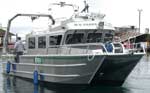
Repeat bathymetric surveys were performed between October 2023 and January 2025 (U.S. Geological Survey field activity number 2023-655-FA) in the shallows of south San Francisco Bay, California using either a 234 kHz SwathPlus interferometric sonar or 200 kHz single beam sonar system. Gridded bathymetric surfaces derived from the processed single beam sonar data were produced with using linear interpolation. The bathymetric datasets are provided in GeoTIFF format. |
Samantha C McGill |
| Oceanographic time-series monitoring data of a shallow-water placement of dredged sediment in south San Francisco Bay, California, 2023-2025 |
LISST |
Oceanographic and meteorological time-series monitoring data were collected by the U.S. Geological Survey (USGS) Pacific Coastal and Marine Science Center from 2023 to 2025, to monitor a pilot shallow-water placement of dredged sediment project led by the US Army Corps of Engineers San Francisco District. Data were collected at nine stations located in the shallows offshore of Whales Tail Marsh in south San Francisco Bay, CA. Stations were positioned around the placement site of the dredged material. Data were collected prior to, during, and after the sediment was placed. Stations consisted of platforms deployed along 2 transects: one along-shore and one cross-shore. Stations in the cross-shore transect included: XM, located approximately 25 meters from the bay edge on Whales Tail marsh; X4 located slightly offshore of the marsh; X3 just offshore (west) of X4; X2 (same location as XG and XL) east/marsh side of the placement area; X1 western side of the placement area; and X0 just east of the navigational channel. A wave-met buoy MW was close to and slightly east of X0. Along-shore transect platforms included AN and AS, north and south of the placement area, respectively. Data types include pressure, velocity, turbidity, suspended particle size distribution, conductivity, temperature, wave statistics, and wind speed and direction, barometric pressure and air temperature. |
Samantha C McGill |
| Gridded bathymetric data from repeat surveys of south San Francisco Bay, California, 2023-2025 |
SWATH plus-M |
Repeat bathymetric surveys were performed between October 2023 and January 2025 (U.S. Geological Survey field activity number 2023-655-FA) in the shallows of south San Francisco Bay, California using either a 234 kHz SwathPlus interferometric sonar or 200 kHz single beam sonar system. Gridded bathymetric surfaces derived from the processed single beam sonar data were produced with using linear interpolation. The bathymetric datasets are provided in GeoTIFF format. |
Samantha C McGill |
| Properties of sediment collected throughout the strategic placement of dredge material in south San Francisco Bay, California, 2023-2025 |
Gomex Core |
Bed sediment samples were collected from several sites within south San Francisco Bay, California, USA. Stations sampled were located within or adjacent to an area defined for strategic sediment placement. These stations were more specifically located either near instrumented stations where time-series data were collected, on/near a mound of placed sediment, or in a channel adjacent to an instrumented station. Time-series data are provided on the home page for this data release. Sediment samples were collected by ship-side push core sampling or subsampling a Gomex box corer with push cores. Push cores, which ranged in total length from 6 to 16 centimeters (cm), were sectioned by depth. The uppermost six sections from each core were 1 cm thick, and the following sections were 2 cm thick. Samples were analyzed for sediment properties including bulk density, particle size distribution, and percent carbon. |
Samantha C McGill |
| Properties of sediment collected throughout the strategic placement of dredge material in south San Francisco Bay, California, 2023-2025 |
Push corer |
Bed sediment samples were collected from several sites within south San Francisco Bay, California, USA. Stations sampled were located within or adjacent to an area defined for strategic sediment placement. These stations were more specifically located either near instrumented stations where time-series data were collected, on/near a mound of placed sediment, or in a channel adjacent to an instrumented station. Time-series data are provided on the home page for this data release. Sediment samples were collected by ship-side push core sampling or subsampling a Gomex box corer with push cores. Push cores, which ranged in total length from 6 to 16 centimeters (cm), were sectioned by depth. The uppermost six sections from each core were 1 cm thick, and the following sections were 2 cm thick. Samples were analyzed for sediment properties including bulk density, particle size distribution, and percent carbon. |
Samantha C McGill |
| Oceanographic time-series monitoring data of a shallow-water placement of dredged sediment in south San Francisco Bay, California, 2023-2025 |
RBR Virtuoso |
Oceanographic and meteorological time-series monitoring data were collected by the U.S. Geological Survey (USGS) Pacific Coastal and Marine Science Center from 2023 to 2025, to monitor a pilot shallow-water placement of dredged sediment project led by the US Army Corps of Engineers San Francisco District. Data were collected at nine stations located in the shallows offshore of Whales Tail Marsh in south San Francisco Bay, CA. Stations were positioned around the placement site of the dredged material. Data were collected prior to, during, and after the sediment was placed. Stations consisted of platforms deployed along 2 transects: one along-shore and one cross-shore. Stations in the cross-shore transect included: XM, located approximately 25 meters from the bay edge on Whales Tail marsh; X4 located slightly offshore of the marsh; X3 just offshore (west) of X4; X2 (same location as XG and XL) east/marsh side of the placement area; X1 western side of the placement area; and X0 just east of the navigational channel. A wave-met buoy MW was close to and slightly east of X0. Along-shore transect platforms included AN and AS, north and south of the placement area, respectively. Data types include pressure, velocity, turbidity, suspended particle size distribution, conductivity, temperature, wave statistics, and wind speed and direction, barometric pressure and air temperature. |
Samantha C McGill |
| Oceanographic time-series monitoring data of a shallow-water placement of dredged sediment in south San Francisco Bay, California, 2023-2025 |
RBR Duo |
Oceanographic and meteorological time-series monitoring data were collected by the U.S. Geological Survey (USGS) Pacific Coastal and Marine Science Center from 2023 to 2025, to monitor a pilot shallow-water placement of dredged sediment project led by the US Army Corps of Engineers San Francisco District. Data were collected at nine stations located in the shallows offshore of Whales Tail Marsh in south San Francisco Bay, CA. Stations were positioned around the placement site of the dredged material. Data were collected prior to, during, and after the sediment was placed. Stations consisted of platforms deployed along 2 transects: one along-shore and one cross-shore. Stations in the cross-shore transect included: XM, located approximately 25 meters from the bay edge on Whales Tail marsh; X4 located slightly offshore of the marsh; X3 just offshore (west) of X4; X2 (same location as XG and XL) east/marsh side of the placement area; X1 western side of the placement area; and X0 just east of the navigational channel. A wave-met buoy MW was close to and slightly east of X0. Along-shore transect platforms included AN and AS, north and south of the placement area, respectively. Data types include pressure, velocity, turbidity, suspended particle size distribution, conductivity, temperature, wave statistics, and wind speed and direction, barometric pressure and air temperature. |
Samantha C McGill |
| Oceanographic time-series monitoring data of a shallow-water placement of dredged sediment in south San Francisco Bay, California, 2023-2025 |
Nortek Vector ADV |
Oceanographic and meteorological time-series monitoring data were collected by the U.S. Geological Survey (USGS) Pacific Coastal and Marine Science Center from 2023 to 2025, to monitor a pilot shallow-water placement of dredged sediment project led by the US Army Corps of Engineers San Francisco District. Data were collected at nine stations located in the shallows offshore of Whales Tail Marsh in south San Francisco Bay, CA. Stations were positioned around the placement site of the dredged material. Data were collected prior to, during, and after the sediment was placed. Stations consisted of platforms deployed along 2 transects: one along-shore and one cross-shore. Stations in the cross-shore transect included: XM, located approximately 25 meters from the bay edge on Whales Tail marsh; X4 located slightly offshore of the marsh; X3 just offshore (west) of X4; X2 (same location as XG and XL) east/marsh side of the placement area; X1 western side of the placement area; and X0 just east of the navigational channel. A wave-met buoy MW was close to and slightly east of X0. Along-shore transect platforms included AN and AS, north and south of the placement area, respectively. Data types include pressure, velocity, turbidity, suspended particle size distribution, conductivity, temperature, wave statistics, and wind speed and direction, barometric pressure and air temperature. |
Samantha C McGill |
| Oceanographic time-series monitoring data of a shallow-water placement of dredged sediment in south San Francisco Bay, California, 2023-2025 |
CTD - RBR |
Oceanographic and meteorological time-series monitoring data were collected by the U.S. Geological Survey (USGS) Pacific Coastal and Marine Science Center from 2023 to 2025, to monitor a pilot shallow-water placement of dredged sediment project led by the US Army Corps of Engineers San Francisco District. Data were collected at nine stations located in the shallows offshore of Whales Tail Marsh in south San Francisco Bay, CA. Stations were positioned around the placement site of the dredged material. Data were collected prior to, during, and after the sediment was placed. Stations consisted of platforms deployed along 2 transects: one along-shore and one cross-shore. Stations in the cross-shore transect included: XM, located approximately 25 meters from the bay edge on Whales Tail marsh; X4 located slightly offshore of the marsh; X3 just offshore (west) of X4; X2 (same location as XG and XL) east/marsh side of the placement area; X1 western side of the placement area; and X0 just east of the navigational channel. A wave-met buoy MW was close to and slightly east of X0. Along-shore transect platforms included AN and AS, north and south of the placement area, respectively. Data types include pressure, velocity, turbidity, suspended particle size distribution, conductivity, temperature, wave statistics, and wind speed and direction, barometric pressure and air temperature. |
Samantha C McGill |
| Oceanographic time-series monitoring data of a shallow-water placement of dredged sediment in south San Francisco Bay, California, 2023-2025 |
ADCP - RDInstruments - 1200 kHz |
Oceanographic and meteorological time-series monitoring data were collected by the U.S. Geological Survey (USGS) Pacific Coastal and Marine Science Center from 2023 to 2025, to monitor a pilot shallow-water placement of dredged sediment project led by the US Army Corps of Engineers San Francisco District. Data were collected at nine stations located in the shallows offshore of Whales Tail Marsh in south San Francisco Bay, CA. Stations were positioned around the placement site of the dredged material. Data were collected prior to, during, and after the sediment was placed. Stations consisted of platforms deployed along 2 transects: one along-shore and one cross-shore. Stations in the cross-shore transect included: XM, located approximately 25 meters from the bay edge on Whales Tail marsh; X4 located slightly offshore of the marsh; X3 just offshore (west) of X4; X2 (same location as XG and XL) east/marsh side of the placement area; X1 western side of the placement area; and X0 just east of the navigational channel. A wave-met buoy MW was close to and slightly east of X0. Along-shore transect platforms included AN and AS, north and south of the placement area, respectively. Data types include pressure, velocity, turbidity, suspended particle size distribution, conductivity, temperature, wave statistics, and wind speed and direction, barometric pressure and air temperature. |
Samantha C McGill |